
Table of Contents
- Top Cable Providers Serving Virginia Beach
- Cable vs. Fiber vs. Satellite: Understanding Your Connectivity Options
- Channel Lineup and Streaming Integration
- Bundle Deals, Pricing, and Hidden Fees
- Low-Voltage Cabling Contractors and Infrastructure Behind the Service
- Commercial Security System Installation and Business Connectivity
- How to Choose the Right Provider for Your Needs
- Frequently Asked Questions
Last Updated: October 4, 2026
Top Cable Providers Serving Virginia Beach
When you're evaluating a cable company Virginia Beach, the first step is understanding which providers actually serve your address. Three major carriers dominate the market: Comcast Xfinity, Cox Communications, and Verizon Fios. Each offers different infrastructure, speeds, and bundle options depending on your neighborhood.
Comcast Xfinity has the broadest footprint, Cox Communications offers competitive pricing, and Verizon Fios delivers fiber-optic speeds where available but with limited coverage.
Verify service availability at your specific address with a cable company Virginia Beach representative, availability gaps are common even within the same neighborhood.
Cable vs. Fiber vs. Satellite: Understanding Your Connectivity Options
Cable uses coaxial lines, fiber-optic uses light pulses through glass strands for faster speeds, and satellite relies on orbital transmission with weather interference.
Cable represents the practical middle ground: faster than satellite, cheaper than fiber, and widely available. A cable company Virginia Beach typically offers 100-500 Mbps depending on plan tier.
How Local Infrastructure Determines What's Actually Available to You
Technology availability is determined by infrastructure proximity. Neighborhoods closer to subsea cable landing stations and data centers receive fiber service first; farther areas may have only cable or satellite for years.
Within the same zip code, one neighborhood might have Verizon Fios while a street three blocks away has only cable, because fiber requires direct conduit pathways and is economically viable only in denser areas.
Cable performance depends on hub proximity to internet exchange points.
Fiber-Optic Service: Availability and Performance Trade-Offs
Fiber-optic service provides symmetrical speeds (matching upload and download), which matters for remote work and content creation. The trade-off is limited availability, fiber requires direct infrastructure that doesn't reach every address.
Verizon Fios availability is concentrated in specific neighborhoods. Check your exact street address on Verizon's website, many properties show as ineligible even where Fios serves nearby buildings.
Satellite: When Cable and Fiber Genuinely Don't Reach
Satellite fills gaps where cable and fiber don't exist, but high latency (500+ ms vs. 10-20 ms for cable) makes it unsuitable for gaming or real-time trading. Starlink reduces latency to 20-40 ms, viable for video conferencing but not competitive gaming.
Satellite also carries data caps (typically 150-500 GB monthly) and weather-dependent performance degradation. Heavy rain or snow noticeably reduces speeds and increases latency. For properties where cable infrastructure genuinely doesn't exist, satellite is often the only option, but understanding these limitations prevents frustration after installation.
Channel Lineup and Streaming Integration
A cable company Virginia Beach typically bundles 100-300 channels depending on basic, standard, or premium tier selection.
The real question is whether your must-watch networks are included. Differences appear in regional sports networks, international programming, and specialty channels.
Modern cable packages integrate streaming services, Comcast Xfinity bundles Peacock and Netflix into higher-tier packages, reducing separate subscriptions and simplifying billing.
Bundled streaming often has limitations, lower resolution, or ad-supported tiers compared to direct subscriptions, so most customers maintain separate accounts.
Bundle Deals, Pricing, and Hidden Fees
A cable company Virginia Beach offers bundles combining TV, internet, and phone at discounted rates, but promotional pricing for 12 months masks higher renewal rates.
Read contract terms before signing. Equipment rental fees ($10-15/month) add up over time. Installation, modem, and service call costs vary by provider.
Broadcast TV fees ("regional sports fees" or "programming fees") appear separately from advertised prices and aren't optional. Taxes and regulatory fees add 10-15% to monthly bills.
Contracts lock you in for 12-24 months with early termination fees ($200-400). Some providers offer contract-free options at higher rates.
| Fee Type | Typical Range | Notes |
|---|---|---|
| Equipment Rental | $10-15/month | Some providers include modem; others charge separately |
| Installation | $50-150 | Waived during promotions; standard fee applies otherwise |
| Broadcast/Programming Fee | $15-25/month | Non-negotiable add-on to most packages |
| Early Termination | $200-400 | Applies if you cancel during contract period |
| Service Call | $75-150 | Charged if technician visits after installation |
Cable Bundle vs. Cord-Cutting: The Real Monthly Cost Comparison
A typical cable bundle starts at $99-129/month for 12 months, then jumps to $149-189/month. With broadcast TV fees ($15-25), equipment rental ($10-15), and taxes (10-15%), first-year cost is ~$130-160/month; after year one, expect $180-220/month.
A cord-cutting alternative for the same household might look like:
- Standalone broadband (cable internet, 300+ Mbps): $60-80/month
- Netflix (Standard or Premium): $15-23/month
- Disney+ Bundle (Disney+, Hulu, ESPN+): $14/month
- Max (formerly HBO Max): $16/month
- Paramount+: $6-12/month (ad-supported tier)
- YouTube TV or Hulu Live (for live sports/news): $73-85/month
- VoIP phone service (optional): $10-15/month
Total: $194-233/month for the full suite, or $75-95/month if you skip live TV and use free ad-supported services (Pluto TV, Tubi, Freevee) for background viewing.
The break-even point depends on your actual viewing habits. If you watch live sports regularly, YouTube TV ($73-85/month) or Hulu Live ($85/month) is necessary, making the cord-cutting option comparable to cable renewal rates.
The hidden advantage of cord-cutting: no contracts, no early termination fees, and the ability to pause or cancel any service month-to-month. Cable locks you in; streaming gives you flexibility.
Negotiating Your Cable Bill
Cable companies retain customers by negotiating. After your promotional rate expires, call your provider and explicitly state you're considering switching to fiber (if available) or cord-cutting.
Document your conversation. Request written confirmation of any rate reduction, fee waiver, or promotional extension. Verbal promises don't appear on bills; written confirmation prevents disputes later.
If your provider refuses to negotiate and renewal rates exceed $180/month, the math often favors switching. Fiber providers typically offer lower renewal rates and no contracts. Cord-cutting eliminates the cable bill entirely.
Low-Voltage Cabling Contractors and Infrastructure Behind the Service
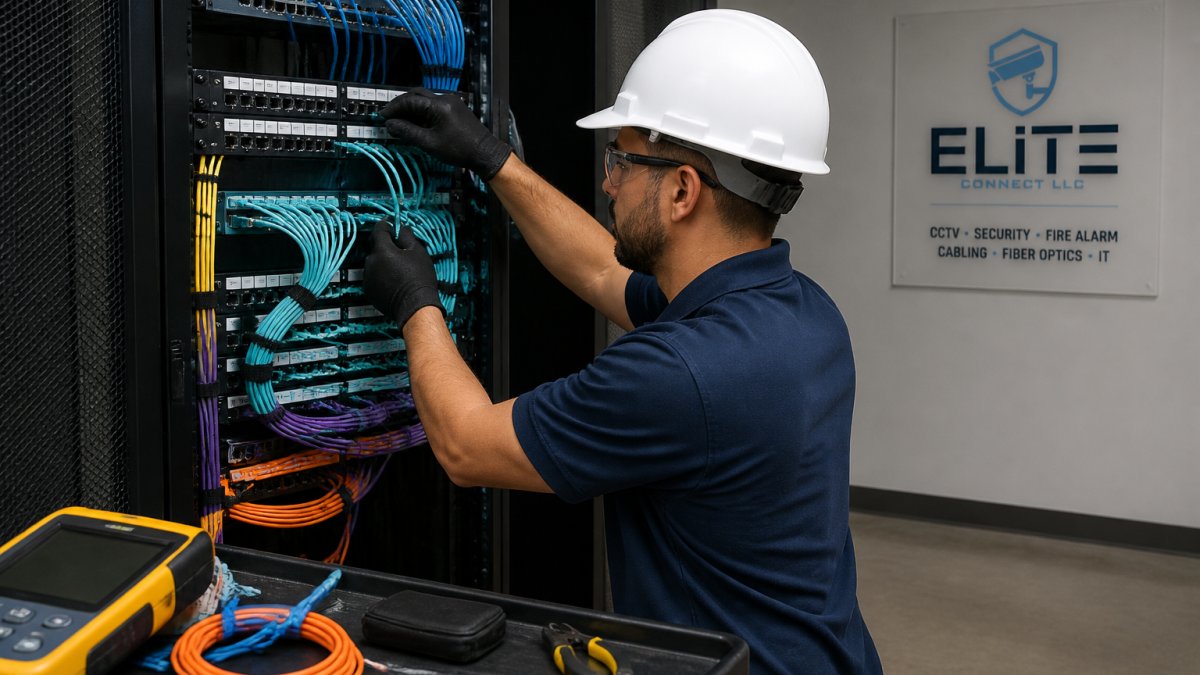
The physical infrastructure delivering cable service to your home involves more than just the main lines. Low-voltage cabling contractors install the structured cabling systems that connect distribution points to residential and commercial properties. This includes data cabling, voice cabling, and fiber-optic connections that form the backbone of modern broadband delivery.
Subsea cable infrastructure plays a critical role in regional connectivity. These underwater fiber-optic cables carry data between continents and landing stations. The cables terminate at data centers and carrier-neutral facilities, where traffic routes to local networks. Understanding this infrastructure helps explain why some neighborhoods experience faster speeds than others, proximity to landing stations and data center connectivity directly impacts available bandwidth.
For properties requiring professional installation, Elite Connect LLC provides structured cabling services that integrate with existing cable company infrastructure. We handle the final-mile connections, ensuring proper termination, testing, and documentation. Our itemized proposals specify cable type, category, and rating, eliminating the ambiguity that creates performance problems later.
Professional installation matters because improper cabling introduces signal loss, interference, and unreliable connections. Many cable company technicians perform basic installation; they don't test or document the work to industry standards. This creates invisible problems that surface months later when speeds drop or connections fail intermittently.
Commercial Security System Installation and Business Connectivity
Businesses in the area face different connectivity requirements than residential customers. A cable company Virginia Beach serving commercial clients must support higher bandwidth, redundancy, and reliability standards. Many businesses require backup connections, failover systems, and service-level agreements guaranteeing uptime.
Commercial security systems depend on reliable, low-latency connectivity. IP-based security cameras, access control systems, and alarm monitoring require consistent network performance. A cable connection alone may not meet these requirements, many commercial properties need fiber-optic service or hybrid connectivity combining cable with backup systems.
Elite Connect LLC integrates security system installation with network infrastructure planning. We design systems where cabling, security cameras, alarm systems, and access control operate as a unified platform.
For businesses, the real cost isn't the cable bill, it's downtime. A four-hour internet outage costs more than a year of premium connectivity service. This is why we recommend professional assessment of your actual connectivity needs rather than accepting whatever your cable company Virginia Beach offers as standard service.
How to Choose the Right Provider for Your Needs
Start by identifying your actual requirements, not your assumed ones. Most residential customers overestimate their bandwidth needs. Streaming video requires 5-10 Mbps per stream. Video conferencing needs 2.5 Mbps upload and download. Gaming needs consistent latency, not necessarily high bandwidth.
Check availability first. Visit provider websites or call directly to confirm service at your address. Ask about current promotional pricing, contract terms, and what fees apply beyond the advertised rate. Request the complete pricing breakdown in writing before committing.
Compare the three dimensions: speed, price, and reliability. Faster isn't always better if you don't need it. Cheaper isn't better if service quality suffers. Reliability, measured by uptime, customer service response time, and infrastructure redundancy, often matters more than either speed or price.
For commercial properties or complex installations, professional guidance prevents costly mistakes. Elite Connect LLC assesses your actual connectivity and security requirements, then recommends the provider and service tier that matches your needs. We handle the infrastructure side, cabling, testing, documentation, so you get reliable performance regardless of which cable company Virginia Beach you choose.
Ask potential providers about their infrastructure investment in your neighborhood. Newer equipment and recent upgrades indicate better long-term reliability. Older infrastructure often means congestion during peak hours and slower actual speeds than advertised.
Choosing the right cable company Virginia Beach requires balancing speed, price, availability, and reliability. The decision isn't just about which provider serves your address, it's about matching your actual connectivity needs to the service that delivers them reliably. Professional assessment of your requirements, infrastructure, and long-term plans prevents overpaying for unnecessary speed while ensuring you don't sacrifice performance where it matters.
At Elite Connect LLC, we help property managers, business owners, and contractors navigate these decisions by providing transparent infrastructure assessment and professional installation. Whether you need residential cabling, commercial security integration, or fiber-optic connectivity planning, our itemized proposals and comprehensive testing ensure your infrastructure performs as promised. Learn more about structured cabling standards to understand what proper installation looks like, then contact us for a consultation on your specific needs.
Frequently Asked Questions
What cable company options are available in Virginia Beach?
Virginia Beach residents typically have access to major cable providers offering digital television, high-speed internet, and bundle packages. Service availability varies by neighborhood, so check your specific address with each provider. Many also offer contract-free options and promotional pricing for new customers. Contact local providers directly or visit their websites to confirm service in your area and compare channel lineups.
How do low-voltage cabling contractors support residential cable installations?
Low-voltage cabling contractors handle the physical infrastructure that cable companies rely on, including in-wall cabling, outlet placement, and network setup. For residential services, they ensure proper cable routing, grounding, and termination to maximize signal quality and bandwidth. Professional installation by certified contractors prevents signal degradation and ensures compliance with building codes, which is especially important for multi-unit properties or homes requiring extensive rewiring.
What should I look for in a cable provider contract?
Review the contract term length, promotional pricing duration, equipment rental fees, installation charges, and early termination penalties. Look for price guarantees that lock in rates for a specified period. Check for hidden costs like modem fees, service call charges, and equipment upgrades. Compare bundle deals that combine TV, internet, and voice services, as these often provide better value than purchasing services separately. Ask about contract-free options if flexibility matters to you.
How does subsea cable infrastructure affect my local internet service?
Subsea cables connect data centers and landing stations that route internet traffic to your neighborhood. Virginia Beach's proximity to major subsea cable landing stations provides redundancy and lower latency, which improves download and upload speeds. This infrastructure backbone supports the broadband capacity available through local internet service providers. Understanding this connectivity layer helps explain why service quality and bandwidth availability can vary between providers and neighborhoods based on their connection to these critical data pathways.