
Table of Contents
- Why You Need a Professional Quote for Security Integration
- What Information to Prepare Before Requesting a Quote
- Security Integrator Questions to Ask Before Hiring
- Understanding Quote Line Items and Cost Drivers
- Security System Proposal Template: What Should Be Included
- How to Compare Security Integration Proposals Effectively
- Security System Integration Best Practices for Project Success
- Project Timeline and Implementation Steps
- Frequently Asked Questions
Last Updated: October 11, 2026
Why You Need a Professional Quote for Security Integration
When you get quote security integration from a professional, it becomes your blueprint for understanding scope, cost, and deliverables. Vague proposals leave critical gaps unfilled, leading to scope creep, hidden costs, and contractor disputes when installation begins.
A detailed quote protects you by forcing integrators to commit to specifics: cable types, equipment models, testing protocols, documentation standards, and timelines. This creates accountability rather than relying on reputation alone.
Systems installed without proper quotes often lack test results, as-built documentation, or NDAA compliance verification. When failures or audits occur, there's no proof the work was done correctly. A professional quote prevents this by requiring integrators to specify deliverables and proof.
What Information to Prepare Before Requesting a Quote
Gather detailed information before contacting integrators. Vague requests generate vague proposals; detailed requests generate comparable quotes.
Property Details and Access Points
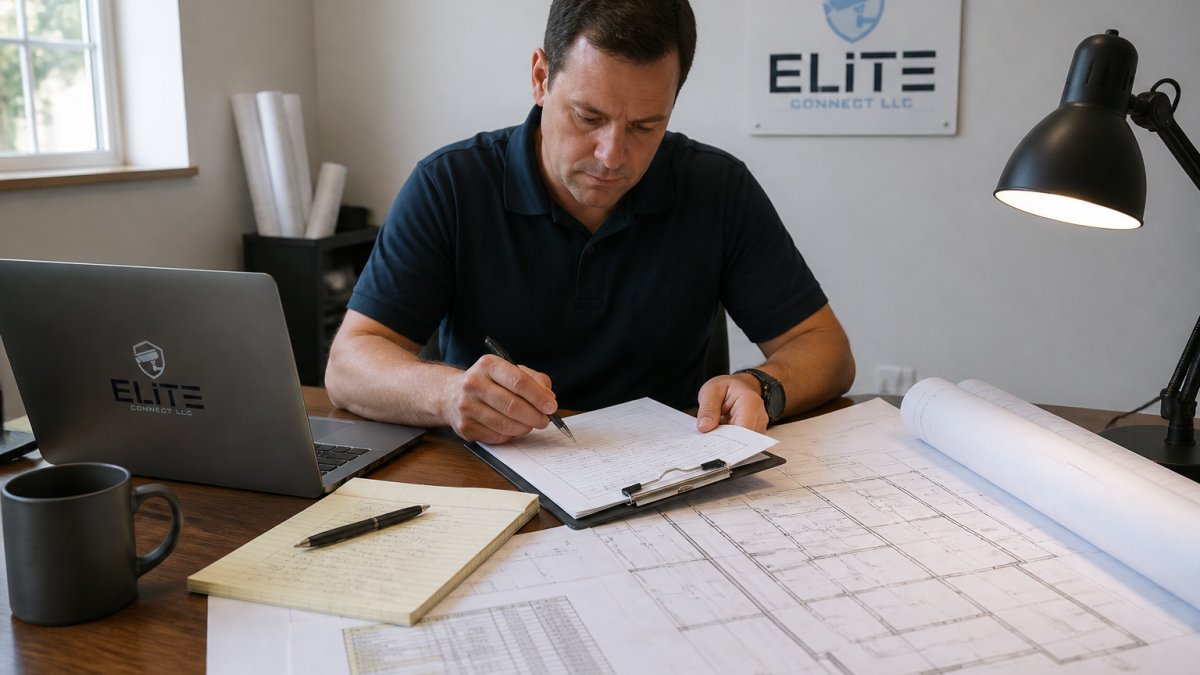
Document your property's square footage, floors, building materials, and existing infrastructure. Specify where cabling will run and how many entry points exist. This information helps integrators plan cable routing and equipment placement.
Provide a floor plan marking camera, card reader, sensor, and panel locations. Note obstacles like server rooms, electrical panels, and structural columns that affect cable routing. Clarify scope for each zone if you have multiple buildings or outdoor areas.
List existing security equipment and whether it will be replaced or integrated. This helps integrators plan the transition and avoid redundant purchases.
Existing Systems and Infrastructure
Describe your IT infrastructure: structured cabling, network topology, managed switches, and WiFi access points. If integrating cameras with your network, specify available bandwidth and whether your infrastructure can handle the data load.
Document existing fire alarm, access control, and electronic security systems. If they'll integrate with new infrastructure, specify their specifications. If NDAA compliance is required, state this upfront to prevent non-compliant equipment proposals.
State compliance requirements specific to your industry: healthcare, government NDAA compliance, or residential intercom integration. This prevents wasted time on incompatible proposals.
Budget and Timeline Expectations
Have a realistic budget range, but don't anchor the integrator before they understand scope. Ask what basic versus comprehensive systems cost to understand trade-offs. When you get quote security integration, it should break down costs by component. Transparent itemization prevents hidden fees and provides a reliable baseline similar to the process of getting an electrical quote for infrastructure upgrades.
Clarify your timeline. Tight deadlines affect pricing and availability; some integrators charge rush fees or may not accommodate you.
Specify whether this is a new installation, replacement, or expansion. Each has different labor costs and complexity: replacements require decommissioning and downtime management; expansions need compatibility testing.
Security Integrator Questions to Ask Before Hiring
Before you sign any contract, ask these questions to evaluate whether an integrator can deliver what you need.
What's your experience with systems like mine? Ask for specific examples and references from similar projects in the last two years. Call references to verify installation quality, timeline adherence, and post-installation support.
Will you provide itemized proposals and test results? The integrator must specify cable types, equipment models, and part numbers, and commit to testing every cable run with documented results and as-built drawings.
What happens if something fails after installation? Understand warranty, support response times, and whether troubleshooting is included or charged separately. Get this in writing.
Are you NDAA compliant, and can you prove it? Ask for NDAA compliance documentation and verify they use only approved vendors. Require proof, not assumptions.
How do you handle integration with existing systems? Ask about compatibility testing and how they'll minimize downtime during transition.
What's your project timeline, and what could delay it? Get a realistic estimate in writing and ask about potential delays: material shortages, site access issues, or incompatible equipment.
Understanding Quote Line Items and Cost Drivers
A professional quote should break down costs into clear categories so you understand where money is going and can compare proposals fairly.
Equipment costs cover cameras, panels, sensors, and cabling. A detailed quote specifies model numbers and quantities so you can verify you're getting what you expect.
Labor costs vary by complexity. Ask integrators to break down labor by task: hours for cabling, camera installation, and testing.
Materials and supplies include conduit, cable trays, connectors, and patch panels. A quality integrator specifies the grade and type of materials they'll use, as cheap materials lead to failures.
Testing and documentation should be a separate line item. Ask what testing includes and what documentation you'll receive: test results, as-built drawings, equipment lists, and warranty information. If not itemized, it's probably not happening.
Project management and coordination may be listed separately for large projects. This covers scheduling, site coordination, and managing multiple trades, which is valuable for complex installations.
Contingency or change order allowance covers unexpected issues: incompatible equipment, structural obstacles, or mid-project scope changes. A 10-15% contingency is reasonable for complex projects.
Security System Proposal Template: What Should Be Included
A complete proposal should include these sections for thorough evaluation.
Executive summary: One-page overview of scope, cost, timeline, and deliverables for quick decision-maker review.
Detailed scope of work: Room-by-room breakdown of what will be installed, including camera types, access points, sensors, cable routes, and conduit types.
Equipment list with specifications: Every piece of equipment with model number, quantity, and key specs. This level of detail prevents surprises.
Testing and documentation plan: Specify what testing will be performed and what documentation will be provided: test results, as-built drawings, warranties, and service manuals.
Timeline and milestones: Specify when each phase starts and finishes, including equipment arrival, installation, testing, and documentation delivery. A realistic timeline shows the integrator has planned thoroughly.
Warranty and support terms: Specify coverage duration, service call response times, ongoing monitoring, and post-warranty support. These terms should be clear and in writing.
Cost breakdown and payment schedule: Break down total cost by category (equipment, labor, materials, testing, documentation).
These sections provide a clear picture of scope and cost, and a basis for comparing proposals from different integrators.
How to Compare Security Integration Proposals Effectively
Comparing proposals fairly requires looking beyond the bottom-line price.
Compare scope, not just cost. Ensure both proposals answer the same question.
Evaluate equipment quality. Ask integrators to justify equipment choices. Understand trade-offs between commercial-grade and consumer-grade equipment, and whether redundant connections are specified.
Assess testing and documentation rigor. One proposal might include basic testing and minimal documentation; another might include comprehensive testing with detailed results and professional as-builts. The latter shows more care and accountability.
Check for hidden assumptions. Clarify whether the integrator will provide cabling, how they'll access crawl spaces, and what downtime is required. Hidden assumptions lead to change orders later.
Verify compliance credentials. Ask for proof of NDAA compliance, fire alarm certification, or electronic security licensing. Don't accept claims without documentation.
Consider long-term support. Ask about company stability, years in business, and support infrastructure. A slightly higher cost from a stable integrator is often the better choice.
Weight quality over price. A proposal 20% cheaper but cutting corners on testing is a risk. Spending 10-15% more for quality workmanship and thorough documentation is usually the right choice for long-term infrastructure.
Security System Integration Best Practices for Project Success
Once you've chosen an integrator, these practices help ensure the project stays on track.
Establish clear communication channels. Designate primary contacts on both sides. Have regular check-ins (weekly for large projects, bi-weekly for smaller ones) to catch issues early.
Verify equipment before installation. Inspect equipment for damage and verify model numbers match the proposal before installation begins.
Document existing conditions. Take photos and video before work begins. This provides a baseline and protects you in disputes about pre-existing damage.
Plan for minimal downtime. Coordinate the installation schedule and plan cutover carefully so you're never without coverage.
Require testing before sign-off. Don't accept the system until testing is complete and documented. Walk through with the integrator to verify cameras record, access control works, and alarms trigger.
Get as-built documentation in writing. As-builts should show the actual system as installed, including cable routes, equipment locations, network diagrams, and installation changes. These are your reference for future maintenance.
Schedule post-installation support. Request a follow-up visit 30 days after installation to verify everything is working and address any issues. This catches problems early.
Project Timeline and Implementation Steps
A typical security integration project follows these phases, with timelines varying by size and complexity.
Planning and scoping (1-2 weeks): Meet with integrators, gather property and requirement information, and obtain proposals.
Contract and equipment ordering (1 week): Sign the contract and order equipment.
Pre-installation preparation (1-2 weeks): The integrator schedules work and coordinates site access.
Installation and cabling (1-4 weeks): The integrator installs cabling, mounts equipment, and makes connections. Have regular check-ins to verify progress.
Testing and commissioning (1-2 weeks): The integrator tests every component, documents results, and trains your team. Don't rush this critical phase.
Documentation and handoff (1 week): Receive test results, as-built drawings, equipment manuals, warranty information, and training materials.
Post-installation support (30 days): The integrator makes a follow-up visit to verify everything is working and address any issues.
Expect 6-12 weeks for typical commercial projects, 4-6 weeks for smaller projects, and 3-4 months for large complex projects.
Getting a professional quote for security integration is the foundation of a successful project.
When you're ready to move forward, Elite Connect LLC can help you scope the project and deliver a detailed proposal with itemized costs, comprehensive testing plans, and full documentation including test results and as-builts. Our owner-led approach means no layers between your requirements and installation, you get direct accountability and transparent pricing. Learn more about our security integration services and NDAA-compliant infrastructure to understand how we approach projects differently.
| Project Phase | Timeline | Key Deliverable |
|---|---|---|
| Planning & Scoping | 1-2 weeks | Detailed proposals from integrators |
| Contract & Ordering | 1 week | Signed contract, equipment ordered |
| Pre-Installation | 1-2 weeks | Site access confirmed, schedules finalized |
| Installation | 1-4 weeks | Equipment installed, cabling complete |
| Testing & Commissioning | 1-2 weeks | Test results documented, system operational |
| Documentation & Handoff | 1 week | As-builts, warranties, training materials |
| Post-Installation Support | 30 days | Follow-up visit, issues resolved |
The difference between a system that works for years and one that fails within months comes down to the quote phase.
Frequently Asked Questions
What information should I provide to get an accurate security integration quote?
Provide your property layout (square footage, number of floors, floor plans), existing security systems or infrastructure, access points requiring monitoring, current IT setup and network capabilities, specific security goals (theft prevention, fire safety, access control), budget range, and timeline. The more detail you supply, the more accurate your security integration quote will be. Include photos of existing equipment and note any compliance requirements your business must meet.
What should a security system proposal template include?
A complete security system proposal should detail all equipment (cameras, access control, fire alarm systems, cabling type and category), installation labor, integration with existing systems, project timeline, warranty terms, ongoing monitoring or service plans, compliance certifications, and itemized costs for each component. It should also specify cable ratings, system compatibility, test results, and as-built documentation that will be provided upon completion. Avoid proposals without line-item detail.
How do I compare security integration quotes from different integrators?
Compare quotes by evaluating scope consistency (are they proposing the same equipment and services?), itemized pricing transparency, compliance certifications (NDAA compliance if applicable), warranty and ongoing support terms, and documentation promises (test results, as-builts). Ask each integrator the same questions to ensure apples-to-apples comparison. Be cautious of quotes missing detail or significantly lower than others, they may indicate hidden costs or incomplete scope later.
How long does a security integration project typically take?
Timeline depends on project scope, property size, and system complexity. Small residential installations may take 1-2 weeks, while commercial properties with multiple access points, video surveillance, and fire alarm integration typically require 4-12 weeks. This includes site assessment, equipment procurement, installation, testing, and documentation. Your integrator should provide a detailed project schedule during the proposal phase, including milestones and any dependencies on your IT infrastructure or facility access.
What questions should I ask a security integrator before hiring?
Ask about their licenses and certifications (fire alarm, electronic security, NDAA compliance if needed), experience with your property type, how they handle compatibility with existing systems, warranty coverage and post-installation support, documentation and testing procedures, timeline and scheduling flexibility, and who is responsible if issues arise after installation. Request references from similar projects and clarify whether they manage all trades in-house or subcontract work, single-point accountability is a key differentiator.